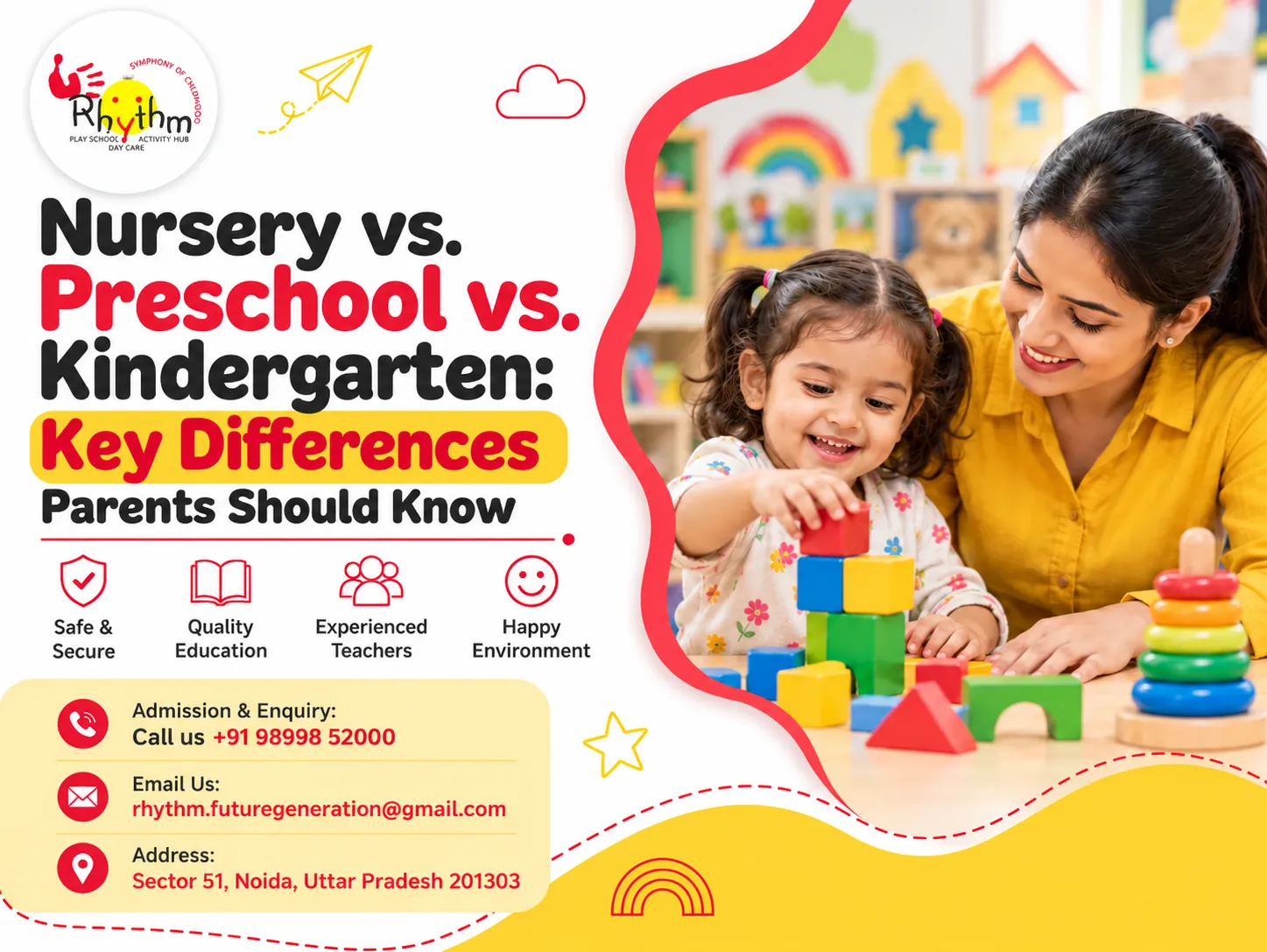
Nursery, preschool, and kindergarten are different stages of early childhood education in India, each designed for a specific age group. Nursery is for children aged 2-3 years, preschool (which includes nursery, junior KG, and senior KG) covers ages 2-5 years, and kindergarten is the final stage before Class 1, usually for children aged 4-6 years. Understanding these stages helps parents choose the right Play School in Noida for their child’s development.
Choosing the right early learning path for your child can feel confusing, especially with so many terms floating around. Nursery, preschool, kindergarten—do these names actually mean different things, or are they just different words for the same stage? If you’re a parent in Noida looking for the right School in Noida, this question matters more than you might think.
Each stage plays a unique role in your child’s growth. Nursery introduces toddlers to structured play. Preschool builds on that foundation with more organized learning. Kindergarten prepares children for the discipline and academics of primary school. Getting this sequence right can make your child’s transition into formal schooling much smoother.
This guide breaks down what each term means, how they differ, and what parents in India—particularly in Noida—should look for when choosing a Play School in Noida for their little one.
What is Nursery, and What Age is it For?
Nursery is typically the first formal step into early education. Most schools in India accept children into nursery between the ages of 2 and 3 years. At this stage, the focus isn’t on academics at all. Instead, teachers concentrate on helping children adjust to being away from home, interacting with other kids, and following simple routines.
A good nursery program includes:
- Storytelling and rhymes to build early language skills
- Simple motor activities like block-building and drawing
- Group play to encourage social interaction
- Basic hygiene and self-care habits, such as washing hands
Nursery is less about lessons and more about comfort. Children learn to separate from parents for a few hours, build confidence, and get used to a classroom environment.
What Does Preschool Actually Mean?
Here’s where things get a little tricky. In India, “preschool” is often used as an umbrella term that covers nursery, Junior KG, and Senior KG together. So when someone says “preschool,” they usually mean the entire early education journey before Class 1, spanning ages 2 to 5 or 6.
Preschool education gradually introduces structured learning. Children move from pure play in nursery to activities that build pre-reading and pre-math skills. A preschool classroom in Noida might include:
- Recognizing shapes, colors, and numbers
- Introduction to the alphabet through songs and games
- Fine motor skill activities like cutting and pasting
- Encouraging independent thinking through simple problem-solving games
Parents searching for a Play School in Noida should understand that “preschool” is the broader journey, while nursery, Junior KG, and Senior KG are the individual steps within it.
What is Kindergarten, and How is it Different?
Kindergarten is the final stretch before a child enters Class 1. In India, this stage is often split into Junior Kindergarten (Junior KG or LKG) for ages 4-5, and Senior Kindergarten (Senior KG or UKG) for ages 5-6.
Kindergarten builds directly on preschool skills but adds more structure and academic rigor. Children at this stage typically work on:
- Writing letters and numbers
- Basic phonics and early reading
- Simple addition and subtraction concepts
- Following classroom routines like raising hands and sitting through longer lessons
The goal of kindergarten is to prepare children for the demands of primary school, where they’ll need to sit for longer periods, follow instructions independently, and handle basic academic tasks.
Nursery vs. Preschool vs. Kindergarten: A Quick Comparison
| Stage | Typical Age | Main Focus |
| Nursery | 2-3 years | Social skills, play, routine building |
| Preschool (umbrella term) | 2-5 years | Nursery, Junior KG, Senior KG combined |
| Junior KG (LKG) | 4-5 years | Pre-reading, pre-math, structured play |
| Senior KG (UKG) | 5-6 years | Writing, phonics, school readiness |
Choose nursery if your child is very young and this is their first time away from home. Choose Junior KG or Senior KG if your child already has some preschool experience and is ready for more structured academic exposure.
How to Choose the Right Play School in Noida
Noida has many options when it comes to early childhood education, which makes the decision harder, not easier. Here are a few things parents should check before enrolling their child:
Age-appropriate curriculum. A good School in Noida will have a curriculum that matches your child’s developmental stage, not one that rushes academics too early.
Teacher-to-child ratio. Younger children, especially in nursery, need more individual attention. Look for schools with a low student-to-teacher ratio.
Safety and hygiene. Visit the school in person. Check that classrooms, washrooms, and play areas are clean and child-friendly.
Play-based learning approach. Especially for nursery and preschool, learning through play is far more effective than rote memorization at this age.
Proximity to home. Shorter commute times mean less stress for young children, particularly during the first year of school.
Why Getting This Right Matters
Choosing the correct stage for your child isn’t just about following a checklist. It directly affects how confident and prepared they feel when they eventually start Class 1. A child who skips nursery and jumps straight into Senior KG might struggle with basic social skills. On the other hand, a child who stays in preschool too long might feel bored or under-stimulated once they’re ready for more structure.
Parents in Noida have access to a wide range of play schools, each with different philosophies and teaching styles. Take the time to visit a few, talk to teachers, and observe a class in session before making your final decision.
Final Thoughts: Setting Your Child Up for Success
Nursery, preschool, and kindergarten each serve a distinct purpose in your child’s early development. Nursery builds comfort and social skills. Preschool introduces structured learning. Kindergarten prepares children academically for primary school. Knowing these differences helps you make an informed choice rather than simply going with the nearest or most popular option.
If you’re exploring a Play School in Noida, start by identifying your child’s current stage of development, then match that with a school’s curriculum and teaching approach. The right fit now can make a real difference in how your child experiences formal schooling later on.
Frequently Asked Questions
At what age should a child start nursery in India?
Most children start nursery between 2 and 3 years of age, depending on their readiness to separate from parents and engage in group activities.
Is preschool the same as kindergarten?
No. Preschool is a broader term covering nursery through Senior KG, while kindergarten specifically refers to Junior KG and Senior KG, the two years right before Class 1.
How much does a play school in Noida typically cost?
Fees vary widely depending on the school’s facilities, location, and reputation. It’s best to contact individual schools in Noida directly for current fee structures.
What should I look for when visiting a play school in Noida?
Check the cleanliness of the campus, the teacher-to-child ratio, the curriculum’s age-appropriateness, and whether the school uses a play-based learning approach for younger children.
Can a child skip nursery and go directly to kindergarten?
It’s possible, but not always recommended. Nursery helps children build foundational social and emotional skills that make the transition to kindergarten smoother.
Related Blog