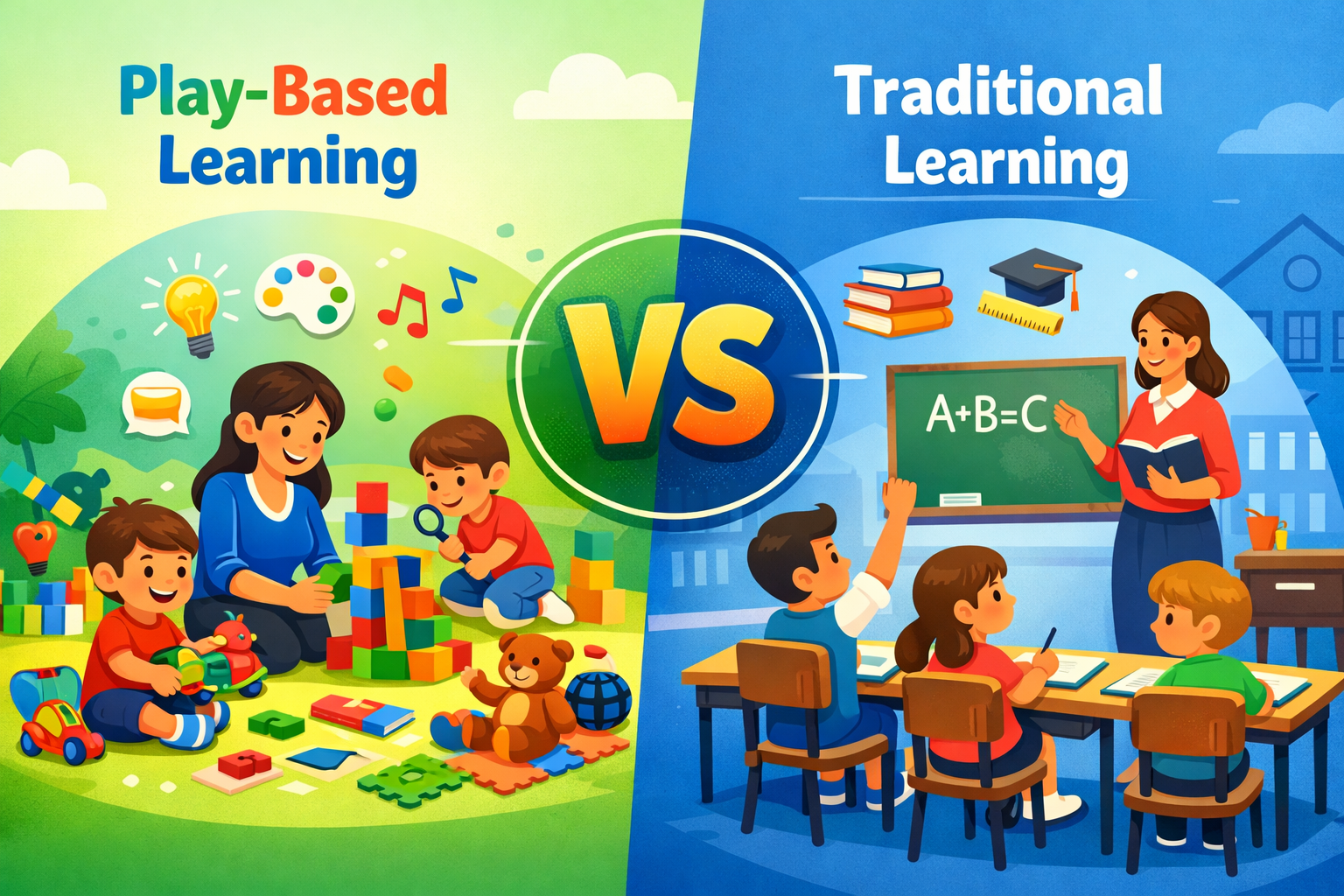
Education in early childhood has changed significantly over the years. Parents today are more aware of how children learn best during their early years. In 2026, families in Noida are carefully choosing the right learning approach for their children. The most common question parents ask is whether play-based learning or traditional learning is better. This discussion is especially important when selecting a Play School in Noida, as early education plays a vital role in a child’s future.
This blog explores the differences between play-based learning and traditional learning and explains what parents in Noida prefer in 2026.
Understanding Early Childhood Learning
Children between the ages of 2 and 6 learn differently from older children. Their brains develop rapidly, and they understand concepts better through experiences rather than memorization. This is why early education focuses on creating a strong foundation instead of academic pressure.
A modern Play School in Noida understands these developmental needs and adopts learning methods that support natural growth, curiosity, and creativity.
What Is Play-Based Learning?
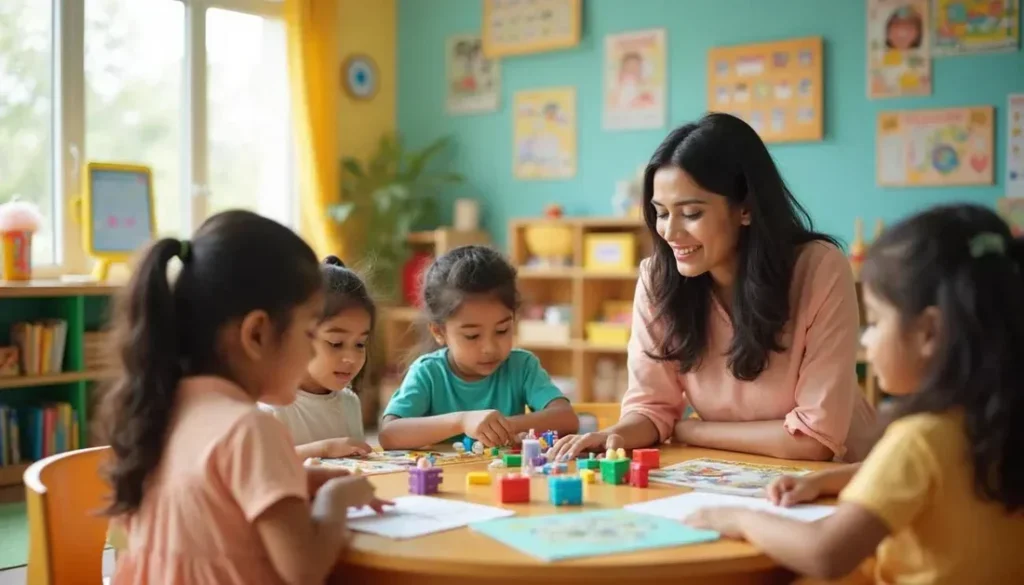
Play-based learning is an approach where children learn through play, activities, and real-life experiences. Learning happens naturally while children engage in games, art, music, storytelling, and hands-on activities.
In a play-based Play School in Noida, children learn:
- Numbers through counting games
- Language through songs and stories
- Social skills through group play
- Problem-solving through puzzles and building activities
This approach allows children to enjoy learning without stress or pressure.
Benefits of Play-Based Learning
Play-based learning offers many benefits that support overall child development.
A quality Play School in Noida using play-based learning helps children:
- Develop creativity and imagination
- Improve communication skills
- Build confidence and independence
- Strengthen social and emotional skills
- Learn at their own pace
Parents in Noida prefer this method because it encourages children to enjoy school and learning.
What Is Traditional Learning?
Traditional learning is a more structured approach where children sit in classrooms and learn through textbooks, worksheets, and teacher-led instruction. This method often focuses on memorization and repetition.
In traditional settings, learning usually includes:
- Writing practice
- Memorizing letters and numbers
- Classroom discipline
- Limited playtime
While this method works well for older students, it may not be suitable for very young children.
Limitations of Traditional Learning for Young Children
Many parents in Noida feel that traditional learning can place unnecessary pressure on young children.
Some limitations include:
- Less focus on creativity
- Limited physical activity
- Stress due to early academic pressure
- Less attention to emotional development
This is why modern parents prefer enrolling their children in a Play School in Noida that follows a balanced, play-based approach.
Why Parents in Noida Prefer Play-Based Learning in 2026
In 2026, parents are more informed about child psychology and early education trends. They understand that children learn best when they are happy, relaxed, and engaged.
Parents prefer play-based learning because:
- Children enjoy going to school
- Learning feels natural and fun
- Children develop important life skills
- Emotional and social growth is supported
A modern Play School in Noida focuses on overall development rather than just academics, which aligns with parent expectations.
Focus on Social and Emotional Development
Play-based learning helps children develop social and emotional skills that are essential for future success. Children learn how to interact with others, manage emotions, and build relationships.
In a well-designed Play School in Noida, activities like group play, role play, and storytelling help children:
- Express feelings
- Build empathy
- Develop teamwork skills
- Gain self-confidence
Traditional learning often lacks this emotional focus, which is why parents prefer modern approaches.
Learning Through Exploration and Curiosity
Children are naturally curious. Play-based learning allows them to explore, ask questions, and learn from their surroundings.
A play-focused Play School in Noida encourages:
- Exploration-based activities
- Hands-on learning
- Creative thinking
- Independent discovery
This helps children develop a love for learning that continues throughout their academic journey.
Balanced Introduction to Academics
Parents in Noida do not want their children to fall behind academically. Play-based learning does not ignore academics; instead, it introduces them in a gentle and engaging way.
In a structured Play School in Noida, children learn:
- Letter sounds through phonics games
- Numbers through playful counting activities
- Early writing through fun exercises
This balanced approach ensures children are academically ready without pressure.
Role of Teachers in Modern Play Schools
Teachers play a key role in both learning approaches. In play-based learning, teachers act as facilitators who guide children rather than instruct them strictly.
A professional Play School in Noida employs trained educators who:
- Observe each child’s progress
- Encourage participation
- Support individual learning needs
- Create a positive learning environment
Parents trust schools where teachers focus on nurturing rather than forcing learning.
Impact on Confidence and Independence
Play-based learning helps children become confident and independent. When children are allowed to make choices and explore, they develop decision-making skills.
In a nurturing Play School in Noida, children:
- Learn self-care habits
- Make small choices
- Build independence
- Gain confidence
Traditional learning methods may not offer the same level of independence at an early age.
Preparing Children for Future Education
One concern parents often have is whether play-based learning prepares children for formal schooling. In reality, children from play-based environments adapt better to school routines.
A modern Play School in Noida prepares children for future learning by:
- Building attention span
- Improving communication
- Teaching classroom behavior
- Developing emotional readiness
This makes the transition to primary school smoother and stress-free.
What Parents Look for in 2026
In 2026, parents in Noida look for play schools that offer:
- Safe and clean environments
- Play-based curriculum
- Trained teachers
- Emotional and social development
- Balanced academics
This is why the demand for a quality Play School in Noida is steadily increasing.
Conclusion
When comparing play-based learning and traditional learning, parents in Noida clearly prefer a modern, play-based approach in 2026. Play-based learning supports overall development, builds confidence, and creates a positive learning experience for young children.
Choosing the right Play School in Noida is an important decision. A play-based learning environment not only prepares children academically but also helps them grow emotionally, socially, and creatively—setting the foundation for lifelong learning.