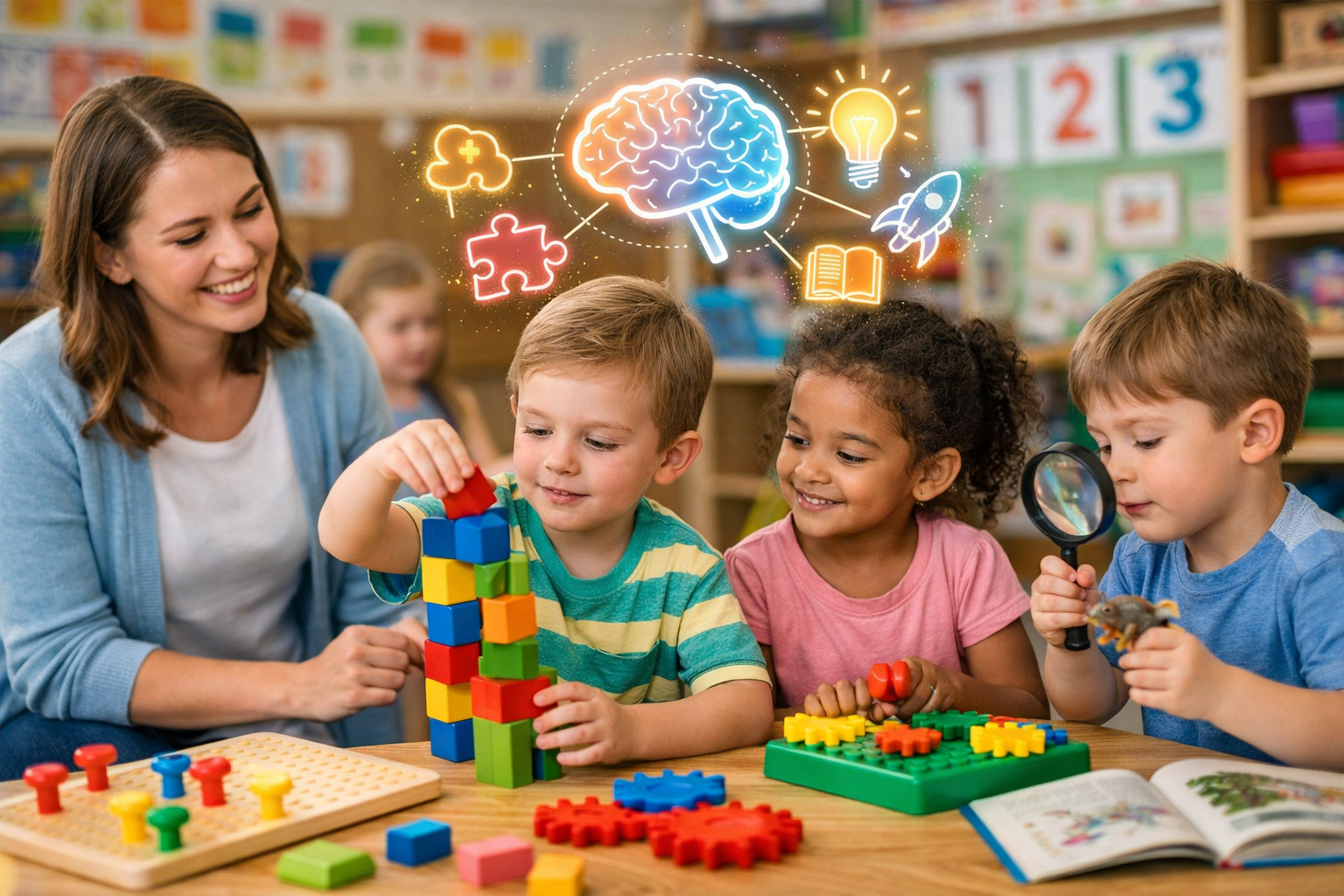
Early childhood is the most important stage for brain development. During the first five years of life, a child’s brain grows rapidly and forms millions of connections every day. What children experience during this time strongly influences how they think, learn, and behave in the future. This is why play-based learning has become one of the most effective and recommended approaches in early education.
Play-based learning is not just about fun. It is a powerful way to support brain development, creativity, emotional strength, and problem-solving skills. A quality Pre School in Noida follows play-based learning to ensure that children grow into confident and capable learners with strong brain foundations.
What Is Play-Based Learning?
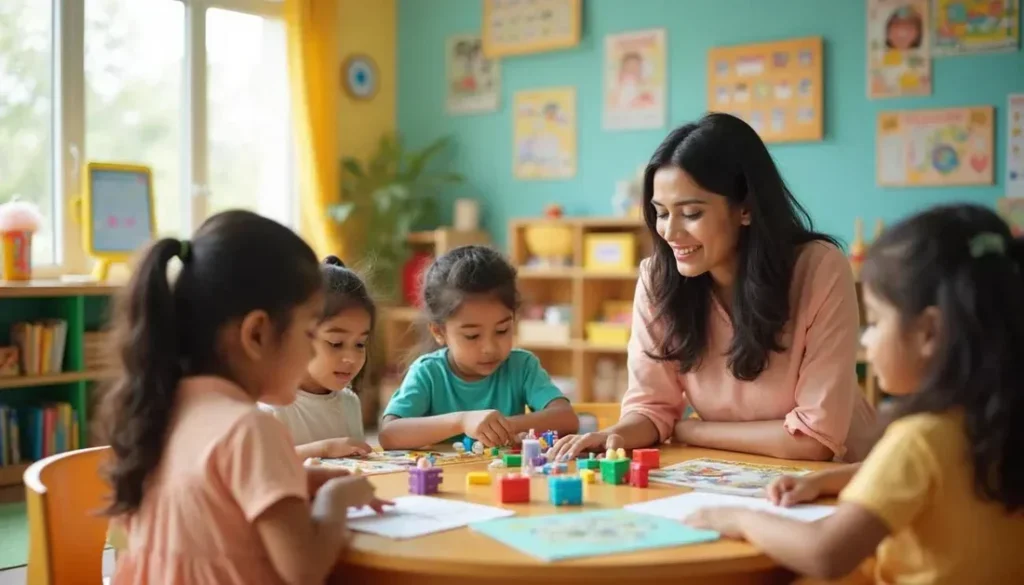
Play-based learning is an approach where children learn through play, exploration, and hands-on activities. Instead of memorizing information, children actively engage with their environment. Learning happens naturally while children play with toys, solve puzzles, listen to stories, sing songs, and interact with others.
In a play-based classroom, teachers guide activities based on a child’s interests and developmental stage. This makes learning enjoyable and meaningful.
How the Preschool Brain Develops
Preschool years are critical for brain development. During this time:
- Neural connections grow rapidly
- Memory and attention skills develop
- Language and thinking abilities improve
- Emotional and social skills take shape
The brain learns best through real experiences, not pressure or rote learning. This is where play-based learning becomes extremely important.
A well-structured Pre School in Noida creates learning experiences that support natural brain growth through play.
- Play Strengthens Cognitive Skills
Cognitive skills include thinking, reasoning, memory, and problem-solving. When children play, they use their brain actively.
Activities like puzzles, building blocks, sorting games, and role play help children:
- Think logically
- Understand cause and effect
- Improve memory
- Develop problem-solving skills
Through play-based learning, children learn how to think, not what to think. This builds stronger and more flexible brains.
- Play Improves Language and Communication
Play creates many opportunities for children to talk, listen, and express themselves. During storytelling, pretend play, and group activities, children naturally use language.
In a Pre School in Noida, play-based learning includes:
- Storytelling sessions
- Rhymes and songs
- Group discussions
- Role play activities
These experiences help children build vocabulary, sentence structure, and confidence in communication.
- Play Supports Emotional Brain Development
Emotional development is closely connected to brain growth. When children feel safe, happy, and understood, their brains are more open to learning.
Play helps children:
- Express emotions
- Manage stress
- Build confidence
- Develop self-control
In play-based classrooms, children are encouraged, not pressured. This emotional security supports healthy brain development.
- Play Enhances Social Brain Skills
Social interaction is a key part of play-based learning. When children play together, they learn how to share, cooperate, and solve conflicts.
Group play activities help children:
- Understand others’ feelings
- Develop empathy
- Improve teamwork skills
- Build friendships
A nurturing Pre School in Noida uses group play to strengthen social and emotional intelligence.
- Play Builds Creativity and Imagination
Creativity plays a big role in brain development. Play allows children to imagine, create, and explore without limits.
Activities like art, music, pretend play, and storytelling help children:
- Think creatively
- Express ideas freely
- Develop innovation skills
Creative play strengthens brain connections and prepares children for future learning challenges.
- Physical Play Boosts Brain Power
Physical movement is directly linked to brain development. When children run, jump, climb, and dance, blood flow to the brain increases, improving focus and learning.
Outdoor and movement-based play helps:
- Improve coordination
- Strengthen motor skills
- Increase attention span
- Support brain-body connection
A quality Pre School in Noida includes daily physical play as part of play-based learning.
- Play Encourages Curiosity and Love for Learning
When learning is enjoyable, children become curious and motivated. Play-based learning encourages children to ask questions and explore.
Curious children:
- Learn faster
- Retain information better
- Develop lifelong learning habits
This love for learning builds a strong foundation for future academic success.
- Play Helps Build Executive Function Skills
Executive function skills include planning, focusing, remembering instructions, and managing emotions. These skills are controlled by the brain’s frontal area.
Through play-based activities, children learn to:
- Follow rules
- Take turns
- Make decisions
- Solve problems independently
These skills are essential for success in school and life.
- Role of Teachers in Play-Based Learning
Teachers play an important role in guiding play-based learning. They observe children, plan activities, and support learning through interaction.
In a trusted Pre School in Noida, teachers:
- Encourage exploration
- Ask open-ended questions
- Support individual learning needs
- Create a safe and engaging environment
Teachers guide learning without controlling it, allowing the brain to grow naturally.
- Long-Term Benefits of Play-Based Learning
Children who experience play-based learning in preschool show long-term benefits such as:
- Better academic performance
- Strong problem-solving skills
- Improved emotional regulation
- Higher confidence and independence
Play-based learning prepares children not only for school but for life.
Why Parents Prefer Play-Based Preschools
Parents today understand that early pressure can harm a child’s development. That is why many parents choose a Pre School in Noida that follows play-based learning.
Such schools focus on:
- Child happiness
- Balanced development
- Learning through experience
- Emotional well-being
This approach supports healthy brain development without stress.
Conclusion
Play-based learning is one of the most effective ways to build stronger brains in preschoolers. It supports cognitive, emotional, social, and physical development in a natural and joyful way. When children learn through play, they grow confident, curious, and capable.
A quality Pre School in Noida that follows play-based learning gives children the best start in life. By allowing children to explore, imagine, and learn at their own pace, play-based education builds strong brain foundations that last a lifetime.