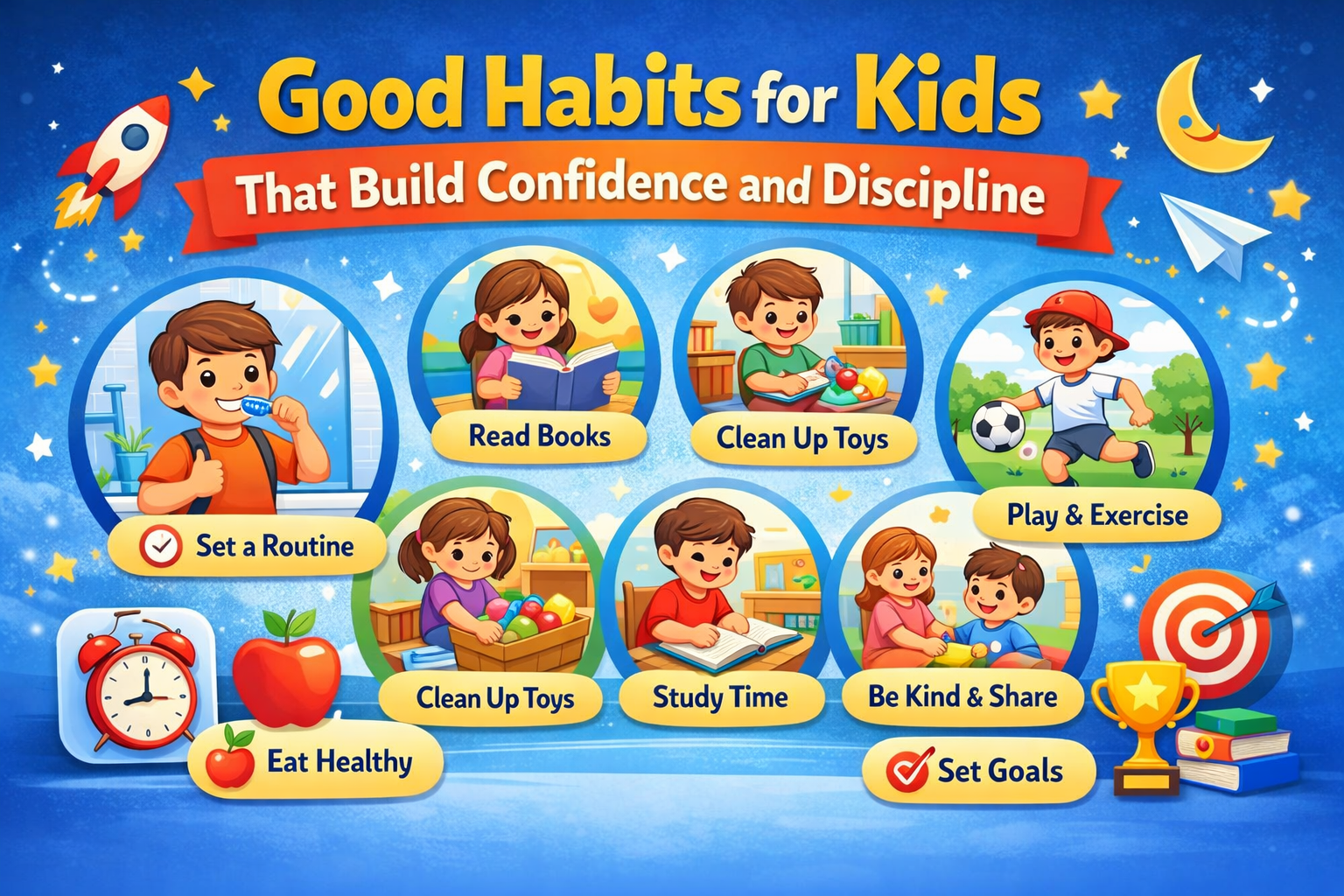
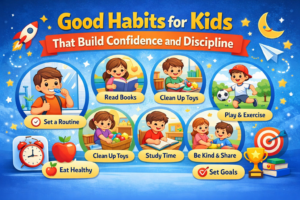
Childhood is the foundation stage of life. The habits children develop during their early years shape their personality, behavior, and future success. Teaching good habits for kids that build confidence and discipline is one of the greatest gifts parents and educators can give.
Confidence helps children believe in themselves, while discipline teaches them self-control, responsibility, and respect. When these two qualities grow together, children become emotionally strong, socially aware, and ready to face challenges.
Parents and teachers at a quality Play School in Noida play a key role in guiding children toward positive habits that support overall development.
Table of Contents
- 1 Why Good Habits Are Important for Kids
- 1.1 Waking Up Early and Following a Routine
- 1.2 Maintaining Personal Hygiene
- 1.3 Saying “Please,” “Thank You,” and “Sorry”
- 1.4 Developing the Habit of Listening
- 1.5 Eating Healthy Food
- 1.6 Keeping Things Organized
- 1.7 Developing the Habit of Sharing
- 1.8 Encouraging Reading Every Day
- 1.9 Practicing Discipline Through Rules
- 1.10 Learning to Express Feelings
- 1.11 Limiting Screen Time
- 1.12 Encouraging Physical Activity
- 1.13 Teaching Gratitude and Respect
- 2 Role of Parents and Play Schools in Habit Building
- 3 Conclusion
Why Good Habits Are Important for Kids
Good habits are learned behaviors that children repeat every day. When practiced consistently, these habits become part of their personality.
Benefits of good habits include:
- Improved self-confidence
- Better focus and learning ability
- Strong discipline and self-control
- Healthy emotional development
- Positive social behavior
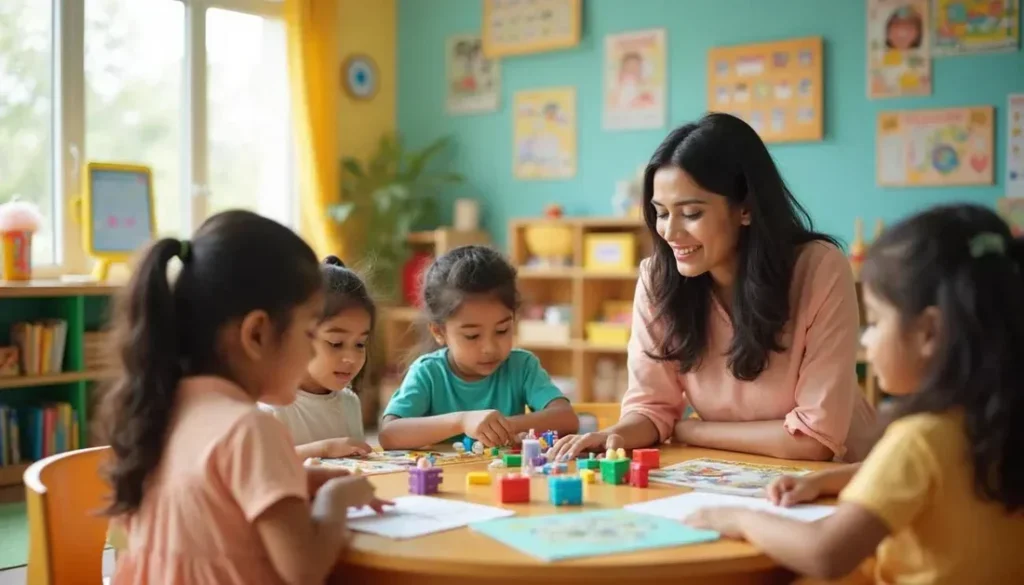
Children who attend a structured Play School in Noida are often introduced to these habits early through daily routines and activities.
-
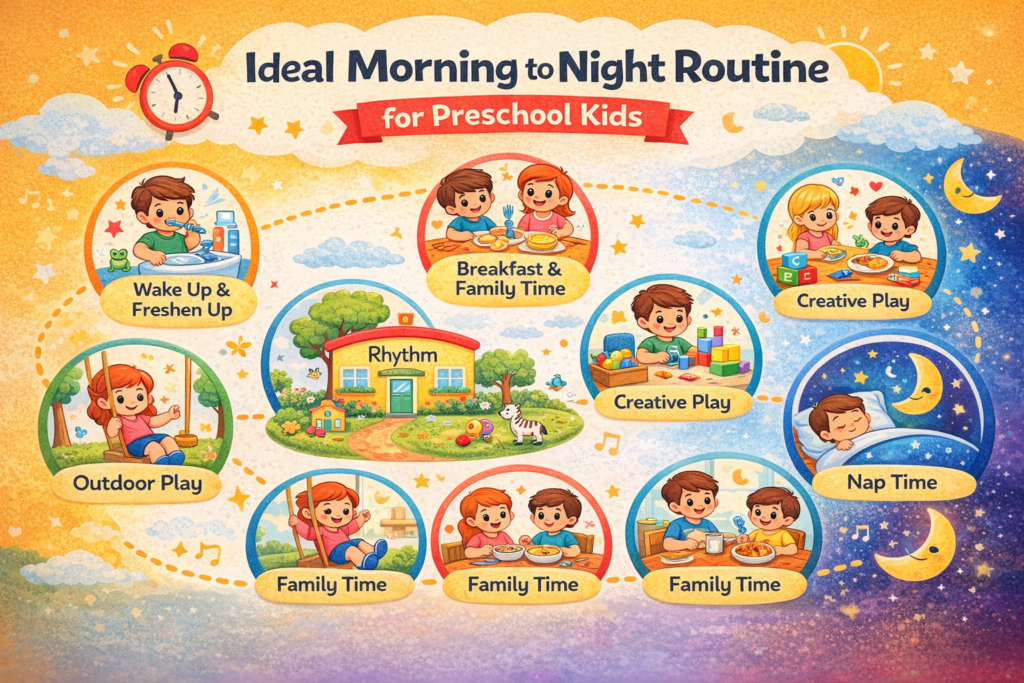
Waking Up Early and Following a Routine
Waking up early helps children start their day calmly and with energy. A fixed daily routine gives children a sense of security and responsibility.
How it builds confidence and discipline:
- Teaches time management
- Reduces stress and confusion
- Builds independence
Preschools and a good Play School in Noida follow daily schedules that help children understand the importance of routine from a young age.
-
Maintaining Personal Hygiene
Personal hygiene is one of the most important habits for kids.
Good hygiene habits include:
- Brushing teeth twice a day
- Washing hands before meals
- Bathing regularly
- Keeping nails clean
- Using tissues properly
How it helps:
- Builds self-respect
- Improves health and cleanliness
- Encourages responsibility
Teachers in a Play School in Noida often guide children gently in maintaining hygiene through fun activities and reminders.
-
Saying “Please,” “Thank You,” and “Sorry”
Polite words may seem small, but they make a big difference in a child’s character.
Benefits:
- Improves communication skills
- Builds respectful relationships
- Boosts self-confidence in social situations
Children who learn manners early feel more comfortable expressing themselves in school and public places.
-
Developing the Habit of Listening
Listening is an essential life skill. Children who listen carefully understand instructions better and communicate more effectively.
How to encourage this habit:
- Make eye contact while speaking
- Ask children to repeat instructions
- Read stories and ask questions
- Encourage turn-taking in conversations
Listening skills are strongly promoted in classrooms of a quality Play School in Noida, helping children become attentive and disciplined learners.
-
Eating Healthy Food
Healthy eating habits play a big role in physical and mental growth.
Good food habits include:
- Eating fruits and vegetables
- Drinking enough water
- Avoiding junk food
- Eating meals on time
How it helps:
- Improves energy levels
- Enhances brain development
- Builds discipline around food choices
Children who eat healthy feel active, confident, and ready to learn.
-
Keeping Things Organized
Teaching kids to keep their belongings organized helps develop responsibility and self-discipline.
Examples:
- Keeping toys in place
- Packing their school bag
- Organizing books and stationery
- Keeping their room tidy
How it builds confidence:
- Encourages independence
- Reduces confusion
- Builds a sense of achievement
Many classrooms in a Play School in Noida encourage children to clean up after activities, making organization a daily habit.
-
Developing the Habit of Sharing
Sharing teaches children empathy and teamwork.
Benefits of sharing:
- Builds emotional intelligence
- Improves friendships
- Encourages cooperation
Activities like group play, circle time, and teamwork in a Play School in Noida help children understand the joy of sharing and caring.
-
Encouraging Reading Every Day
Reading is one of the best habits for children.
Benefits of reading:
- Improves vocabulary
- Boosts imagination
- Enhances focus and patience
- Builds self-confidence
Parents should read storybooks with their children daily. Many play schools also include storytelling sessions to build reading interest.
-
Practicing Discipline Through Rules
Rules help children understand boundaries and right behavior.
Examples of simple rules:
- Completing homework on time
- Following classroom rules
- Respecting elders
- Waiting for their turn
How discipline helps:
- Builds self-control
- Encourages responsibility
- Improves behavior at home and school
A structured Play School in Noida introduces age-appropriate rules in a positive and friendly way.
-
Learning to Express Feelings
Children should be encouraged to express their emotions instead of hiding them.
Healthy emotional habits include:
- Talking about feelings
- Asking for help when needed
- Expressing happiness, fear, or sadness openly
How it builds confidence:
- Improves emotional strength
- Reduces anxiety
- Helps children feel understood
Teachers in a nurturing Play School in Noida create a safe environment where children feel comfortable expressing themselves.
-
Limiting Screen Time
Too much screen time can affect a child’s behavior and confidence.
Healthy screen habits:
- Limited screen time per day
- Educational content only
- No screens before bedtime
Replacing screen time with play, reading, and creative activities helps build discipline and focus.
-
Encouraging Physical Activity
Physical activity helps children stay healthy and active.
Good habits include:
- Outdoor play
- Sports activities
- Dancing or yoga
- Simple exercises
Benefits:
- Improves physical strength
- Boosts confidence
- Reduces stress
Most play schools, including a good Play School in Noida, include daily physical activities in their routine.
-
Teaching Gratitude and Respect
Gratitude helps children develop a positive mindset.
Simple ways to teach gratitude:
- Saying thank you
- Appreciating small things
- Respecting elders and teachers
Grateful children grow into confident and kind individuals.
Role of Parents and Play Schools in Habit Building
Parents are the first teachers, and schools strengthen what children learn at home. A well-structured Play School in Noida supports habit-building by:
- Following daily routines
- Encouraging discipline positively
- Promoting confidence through activities
- Teaching moral values and manners
When parents and teachers work together, children learn faster and better.
Conclusion
Teaching good habits for kids that build confidence and discipline is a gradual and continuous process. Simple daily habits like waking up on time, listening carefully, eating healthy, staying organized, and showing kindness shape a child’s personality.
With the right guidance at home and support from a nurturing Play School in Noida, children grow into confident, disciplined, and happy individuals. Start early, stay consistent, and remember—small habits today create strong personalities tomorrow.